I saw something on Instagram the other day about calm being a “big flex.” It made me giggle a little to think about that because it’s not something that we typically associate with a flex. Rarely does someone say, “I’ll show them! I’m going to be so calm!”
In the same respect, what a flex. Not for the sake of flexing but rather what an impactful move that is too often overlooked because it’s quiet. It’s quiet because calm requires grounding, self-awareness, and self-regulation. It’s insecurity that’s loud. The confidence that comes from being competent and focused on the bigger picture fosters a more calm and measured response. This response doesn’t have to be inauthentic, it’s simply a pause- a breath- that gives us enough time to think before responding.
This is not easy. It’s a practice, and there are seasons when we find ourselves practicing more than we feel is fair or right. Practice anyway. As the Archbishop Desmond Tutu once said, “There comes a point where we need to stop just pulling people out of the river. We need to go upstream and find out why they’re falling in.”
Out of care and a desire to help, it’s easy as educators and leaders to be reactionary, spring into action, and offer solutions or quick fixes. We’ve all been there. I easily fall into this trap myself. There is a time and place for this kind of response, but the instances requiring this kind of action are fewer than those which require a more discerning approach. If we keep focusing all of our energies on pulling people out of the proverbial river, we will never get to building a system that keeps people from falling in to begin with. This is hard to put into practice in systems with admired leaders who put on their capes and saving the day. However, just because this is their expectation doesn’t mean it’s what is best.
We don’t want people falling in the river. Whatever that means to you. But if we don’t teach them how to swim, how to rescue each other, or even offer a life jacket, this is how our days will be spent. Pulling people out of the river. If we don’t learn why they are falling in or what times of day this seems to be more treacherous or which individuals are most vulnerable at which points along the river line, then we are stuck. We are stuck lifting people one by one. Day-after-day with no end in sight. This feeling of being stuck in the suck is what causes people to burnout. It can feel hopeless especially if you have a leader who believes that this is the model for good or “servant” leadership.
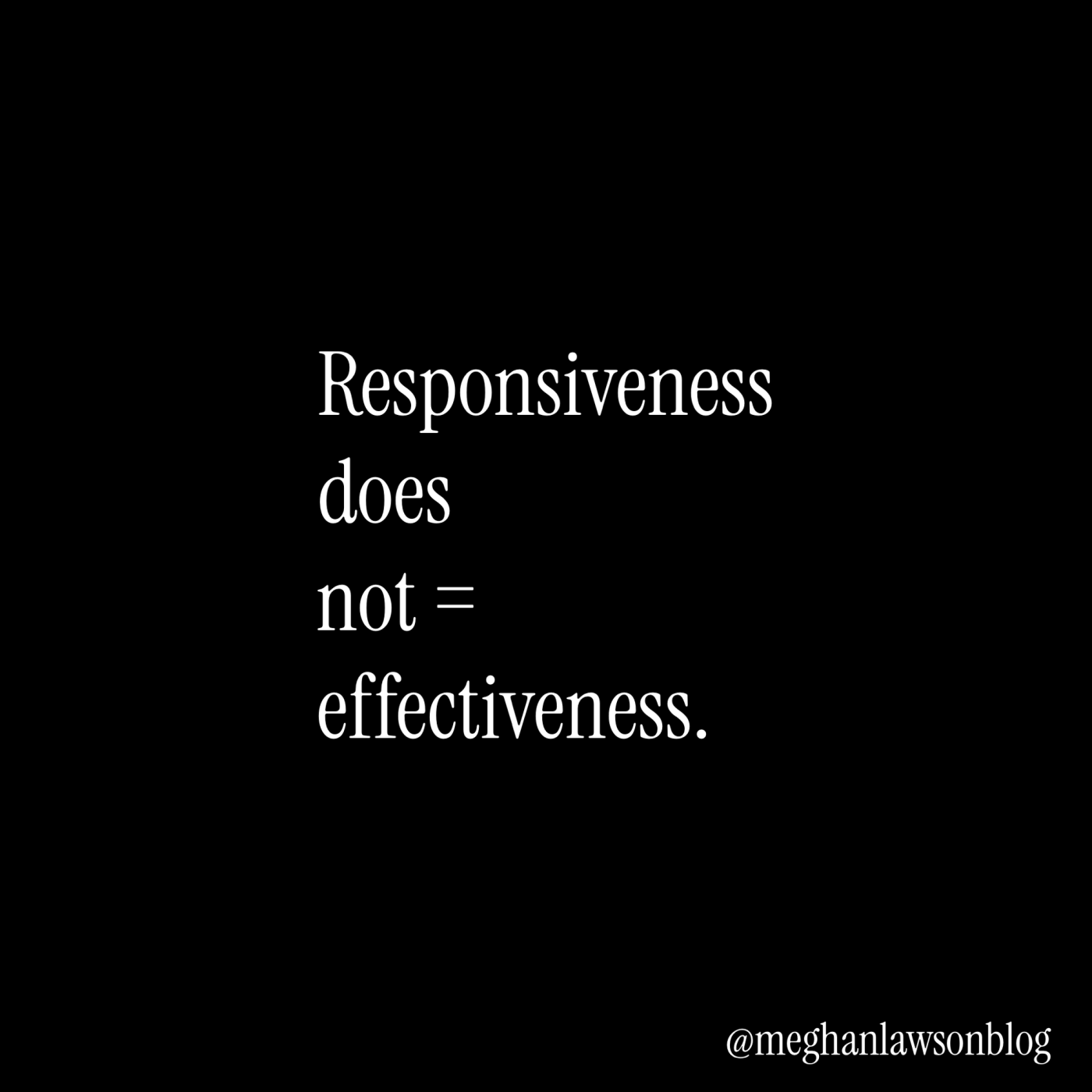
Responsiveness does not equal effectiveness. I’m not saying we don’t respond or respond in a timely manner, but if we respond quickly for the sake of offering a quick solution, this is where a culture can become fragmented and deteriorate. If teachers do all of thinking and solution finding for students, and building leaders do all of the thinking and solution generating for staff, and district administrators do all of the planning and executing for the building administrators, then how will any of us learn the skills we need to keep ourselves and others from falling in the river? How will any of us learn the skills needed to work together as a community to solve complex problems? When we move fast, we run the risk of misdiagnosing root causes and trampling the people who are closest to the work who may be able to solve this with better information and ideas than those of us who may be further away from the issue.
I once had a supervisor tell me after my first year in as a district administrator, “You’ve done a great job responding to needs in the building, but if you were hit by a bus tomorrow, what have you taught them to do for themselves?”
People might not like this way of work at the start, but when they experience a functional system that works hard on behalf of the people, so the people don’t have to work as hard…a system that prevents many problems from occurring to begin with, it’s pretty easy to internalize the value.
I’m simply asking us all to approach this week with an additional breath. Enough breath to create a little space between that triggering email or unfair something that has occurred and our reaction to it. Then, use the space you’ve now given yourself to look upstream a little bit to see a bigger picture, who is impacted, who may need to be involved in the conversation or next steps, why this may be occurring, and what may be causing to reoccur if that’s the case. It’s this type of thinking that leads to more strategic and thoughtful responses.
You don’t have to wait for someone to model this for you or give you permission to operate this way. Even if your boss doesn’t approach the work in this manner, you have free will and can try small moves of calm that may lead you upstream from problems to possibilities.
And if nothing else, you can’t control how people respond, but you can control how you respond. As I say in Legacy of Learning, you can be “ridiculously in charge” of your actions.
Modeling calm is a great place to start.
 MEGHAN LAWSON
Leave a comment