I’ve recently noticed how easy it is to lose sight of foundational practices that are high leverage and can make a profoundly positive impact on we feel and learn in schools.
This is not a criticism of us. It makes a lot of sense, actually, how we got here. The increased pressures of state testing, new/every-changing federal and state guidelines, new initiatives, and competing priorities can make our work can feel a little less hopeful and a bit more hopeless. As VP/Chief of Staff, Jamie Mead describes, “Stuck is the definition of hopelessness.”
With a large amount of things coming at us at one time, it’s easy to feel stuck under the crushing weight of, “Where do I even start?” Perhaps this is what many educators who have been around for some time mean when they say, “I miss how it used to be.” It’s human nature to make what felt good for us in the past feel really big in our memories while brushing over the hard stuff. So, let’s try not to make too many assumptions about how it used to be.
That aside, according to The School Superintendents Association in the article, “An American Imperative: A New Vision for Public Schools,” “In our ever-changing and unpredictable world, learners need to master the skill of knowing what to do when they do not immediately know what to do.”
I would say that it’s not just kids who need to master this skill. We, as adults, are still mastering this skill ourselves.
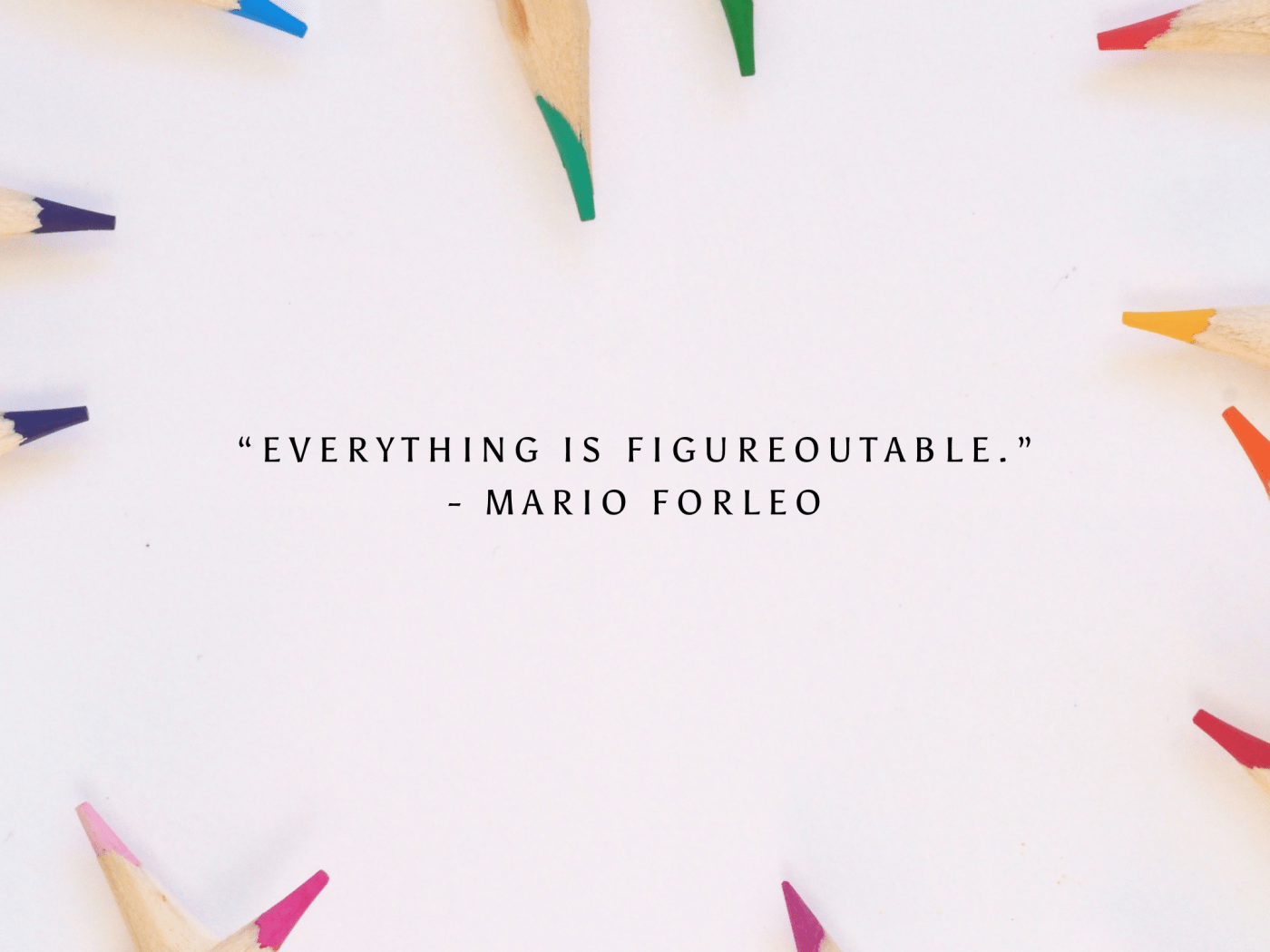
Whether it’s ChatGPT, other emerging technology, or other areas of disruptive change, we need to keep figuring it out. As Marie Forleo says,“Everything is figureoutable.” We are learners, and we are collaborators, and when those two things are true, everything is figureoutable.
No matter the topic, we will continuously figure it out alongside others, and we will change in ways that make our lives and the lives of others better. We will be all the better for it. Whatever the “it” may be.
But how do we find peace in the turmoil? How do we function in this state of constant change and unknown? This is where I think some of our fundamentals get lost. Yesterday, a smart room of educational leaders were exploring the intersection between hope, engagement, and ChatGPT with the Ohio Writing Project. My friend, Andrew Wheatley, said many smart things that got the room thinking but one that sticks with me, “ChatGPT can’t hug a kid.”
This led me to reflect upon the work of Will Guidara, the restaurateur who turned 11 Madison Park into the top restaurant in the world in 2017. In his book, Unreasonable, Hospitality, he explains that after being a bit disappointed with their top 50 ranking in 2010, he had a realization. Restaurants were going to continue creating wild, crazy, and deliciously unimaginable dishes with the hopes of being the best of the best. But what would it look like to do something timeless in a uniquely world class way? What would always hold true?
Then it came to him. People will always need to be well-cared for.
Suddenly, what felt out of reach or unclear, became much more clear. Suddenly, a path forward that was illuminated.
Having an illuminated path forward is incredibly hope-giving. We know, for example, that the people who go to school, work in schools, and send children to schools all want children to be well-cared for and want to be well-cared for themselves. Certainly we each have different preferences, needs, and expectations for what that looks like but this fundamental need holds true.
We often know what steps we can take to take great care of others, but sometimes, knowing doesn’t lead to doing.
While we often know what to do, it’s easy to get stuck in the stuff. But if we can see our way out of the stuff and back to the people, we can find our way back to essential truths like caring deeply for others.
Yes, let’s be well-informed practitioners who are learning and growing, changing, and adapting.
Yes AND, let’s do what we already know how to do well. Let’s be teachers who greet students at the door and connect with them. Let’s be educators who incorporate movement into the classroom. Let’s pause new content when it’s time for a good turn and learn. Let’s ensure that our priority standards are clear and that students know where they are on the path to mastering learning targets. Let’s celebrate small wins and recognize good work for students and staff alike! Let’s ensure our students are reading, writing, thinking, and connecting with others. Yes, this will continue to evolve in the age of AI. But what we do in the classroom is not just about what products our students can produce. Perhaps more important is the learning process itself and the mastery of durable skills such as collaboration and creative problem solving. You know, “Knowing what to do next when you don’t immediately know what to do next.”
What I hope to convey is that in the uncovering of what we do not know, and in the figuring out of what do next, let’s not lose what we know to do. We know that people (and their learning) need to be well-cared for. We know strategies for caring well, and we know how to learn new ones too.
Let’s not let the unknown cloud our ability to listen and truly be present with others. Let’s not let the unknown get in the way of being deeply curious about other people. Let’s not lose our joy. Let’s not forget to play. Let’s not let the unknown keep us from thinking critically, trying new things, and being wholehearted with our work. This premise is at the heart of my upcoming book, Legacy of Learning: Teaching for lasting impact. Not because I think this is new or novel but because I fear it’s getting lost.
It’s easier said than done with the winds of change smacking our faces and tangling our hair. Especially in a time when the criticism feels extra loud.
May our feet be firmly planted in the soil of what is good: taking great care of people and their hope.
And taking great care of ourselves and our hope too.
Tomorrow can be better than today, and collectively, we have the skills needed to make tomorrow better than today.
Keep showing up. Together.
 MEGHAN LAWSON
Leave a comment