Expectations are a powerful and dangerous thing. Clear expectations can support the transformation of work cultures and communities. Unclear expectations can be an equally as powerful but a destructive force. If expectations are left unclear, people bring their own expectations to what they can expect from other people and the work. Unmet expectations lead to disappointment. This is when emotions run high.
In his book, Relentless, Tim Grover says: “You don’t have to love hard work. You just have to crave the end result so much that the hard work becomes irrelevant.”
Too often, our end result is unclear. We can’t hit a mark that we cannot see. Hard work for the sake of building something important with shared purpose and ownership is transformational. Hard work without that kind of clarity can lead to hopelessness.
I’ve written on hope and collective efficacy and see many parallels to between both of these research-based concepts. Hope is the belief that tomorrow can be better than today, and we are the ones we can make it so. Collective efficacy is a shared belief that a team can achieve a common goal together…a goal that is so important and complex, it requires interdependence. So, to me, collective hope and collective efficacy come from the same family.
Why does this matter? Because we all want to matter. We want it to matter we were here. We all have a gnawing whisper inside of us that we were meant to do important things.
“Your life is short and rare and amazing and miraculous, and you want to do really interesting things and make really interesting things while you’re still here. I know that’s what you want for yourself, because that’s what I want for myself, too. It’s what we all want. And you have treasures hidden within you—extraordinary treasures—and so do I, and so does everyone around us. And bringing those treasures to light takes work and faith and focus and courage and hours of devotion, and the clock is ticking, and the world is spinning, and we simply do not have time anymore to think so small.” – Elizabeth Gilbert, Big Magic
The irony of schools is that we are clearly doing arguably the most important work out there, pouring into the hearts and minds of students. We are quite literally shaping the future, and yet many of us feel disconnected from our purpose. Many of us have started to doubt ourselves, each other, and our ability to do big important work together. We are unclear about what we should expect of ourselves and each other. We are unclear about what our common goal is, should be, or could be.
I know how we got to this point. I wrote about it in Legacy of Learning. The best way I can describe it here is a comparison to the fitness industry. It used to be that we all knew that eating a high protein diet, with plenty of fruits and vegetables, exercising, drinking plenty of water, and being thoughtful about our calorie intake would support our overall health and fitness. No quick fixes, only commitment and hard work.
Now, we have all kinds of messages coming our way. I’m not saying any of these messages are bad or good, they just exist as more input to what used to feel more simplistic. Women need this or that to balance their hormones. Don’t eat dairy or gluten. Carbs were “bad” then carbs were “good” and needed for energy. Take this supplement or that supplement. Don’t eat these specific fiber-packed foods and then just kidding, women aren’t getting enough fiber, so eat more fiber and make sure you track it too. A glass of red wine before dinner is good for adults. No, alcohol will slow down your metabolism. On and on and on.
Again, I’m not saying any of these messages are true or not true, but what I am saying is somewhere in all of the noise around health and wellness, we’ve forgotten even why we should care about what we eat and the importance of movement. Some of us, myself included, have traded health for cheap shortcuts.
I’m watching the same thing happen in our schools. It’s not our fault. There is significant amount of noise surrounding our work and our profession. While it’s not our fault, our response is our collective responsibility.
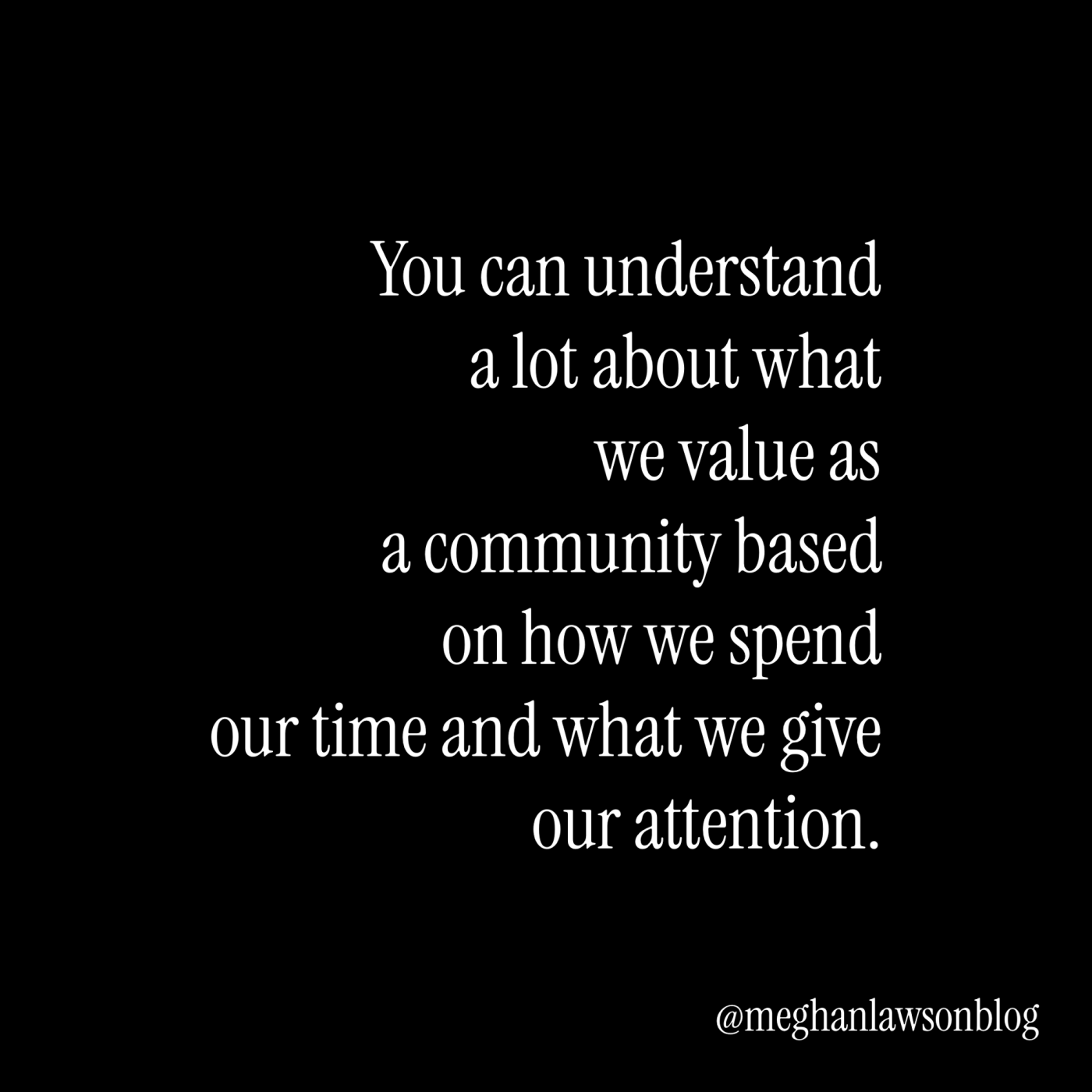
You can understand a lot about what we value as a community of practice based on how we spend our time and what we give our attention. Collaboration time is precious in our schools and yet we lose time complaining about how we don’t have enough of it. Myself included here. I’m not throwing stones. I’m simply asking us to think about this.
Often complaining is a sign of overwhelm, fear, or simply a breakdown in community. Frequently, it’s a combination of all of these things. It’s easy to feel overwhelmed by the amount of seemingly disconnected initiatives coming our way. Then, we become fearful that we won’t be successful which is terrifying because we know how important this work is in schools. This lack of clarity and lack of interconnected work, interdependence, and coherence leads to a breakdown of community. Perhaps it would be easier if I just shut my door, did my thing, and maybe this too shall pass.
We have a moral obligation to drive clarity into the aspirational future we are trying to build together. We need clarity of goals and purpose. We need clarity about how we will get there together, leveraging the strengths of every member of our team and broader community.
We don’t need more shiny things in our schools and districts. We need a shared vision, a clear yet agile path to get there, and a shared commitment to staying the course.
As Gilbert says, we need “focus and courage and hours of devotion, and the clock is ticking, and the world is spinning, and we simply do not have time anymore to think so small.”
 MEGHAN LAWSON
Leave a comment