I spent some time baking cookies this weekend. As I followed the recipe, I found myself taking creative liberty in places where I was confident doing so. For example, I enjoy being able to taste a little bit of the salt in my cookies, so I always use more than the recipe calls. I also tend to enjoy a flaky salt versus table salt in my cookies. I feel the same way about cinnamon and vanilla. I tend to use more than what’s listed. However, I wouldn’t dare experiment with how much baking soda or flour. I’ve messed up those ingredients in the past, and my cookies were not good.
That kind of confidence comes with practice and experience. It’s why trying other people’s cookies so much fun! Some make their cookies more chewy or crispy. Some add ingredients that I hadn’t considered. Some make the most spectacular cookies, and I still don’t know how they do it! But at the end of the day, we are all making cookies. And if we dare bring them to a gathering, the cookies are decent enough for public consumption.
My husband and mom enjoy crispy cookies. I know others who almost prefer them raw in the middle. Some have food allergies, preferences, or nutrition goals, but there are substitutes that can work. At the end of the day, many of us are eating cookies, and I love learning about the different approaches people take in the kitchen.
Many of us are cooking in our classrooms. There is essential learning that we all agree to teach at certain points in the school year, and there are often common agreements on how we measure student mastery too. But a common misconception about high performing teams is that when we gather around student learning, we must plan to use all of the same instructional moves to teach those skills.
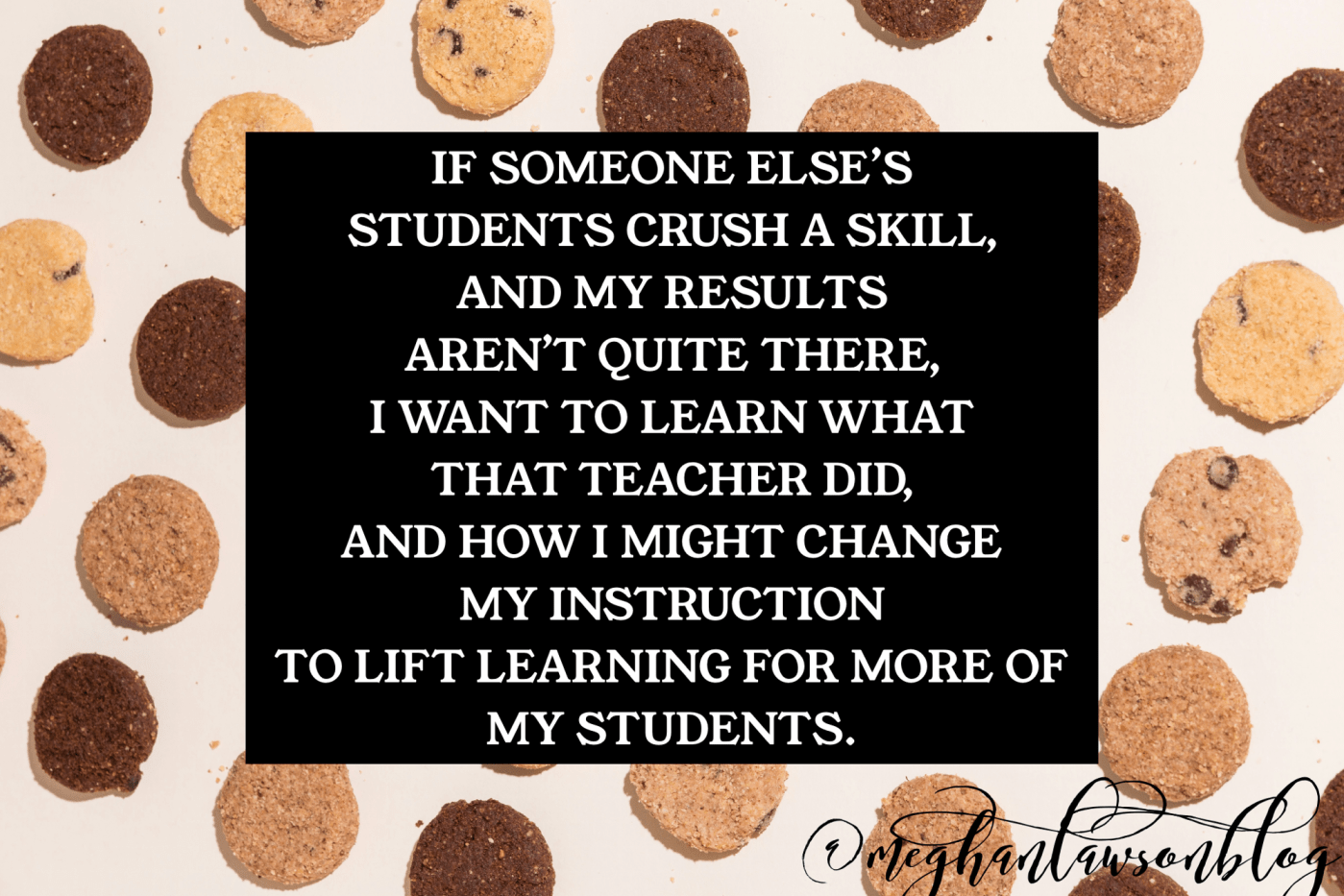
Certainly, teams may choose to go that route if they feel so inclined. But I love to be a part of teams where individual educators use their unique gifts and talents to execute lessons on agreed upon standards and skills. Not only is that incredibly energizing for the person delivering instruction and for their students for that matter because let’s be real, that kind of authentic “flow” is really exciting to be around, but it also leads to rich dialogue and learning on the teacher-based team. If someone else’s students crush a skill, and my results aren’t quite there, I want to learn what that teacher did, and how I might change my instruction to lift learning for more of my students. Certainly, we all teach different groups of students and not all students benefit from the same instructional practices, but isn’t it exciting that we have an opportunity to figure it out together? In order to optimize that kind of dialogue, we need to be able to talk in real-time, so collaboration time needs to occur in close proximity to instruction on the same skills or standards.
The way I see it, we are all making cookies. There are essential elements that make cookies, well, cookies, but there is creative liberty too and that’s the art part.
Both are important and dare I say essential. But if we don’t talk about what we did in the kitchen or classroom, we will struggle to make an even better batch of cookies (or learning) the next time. Instruction is so much more complex than baking. But the world outside of the classroom has little truths to offer us too.
If this metaphor was too much to follow, just make cookies for your next team meeting. Cookies make everything better. 🙂


Leave a comment